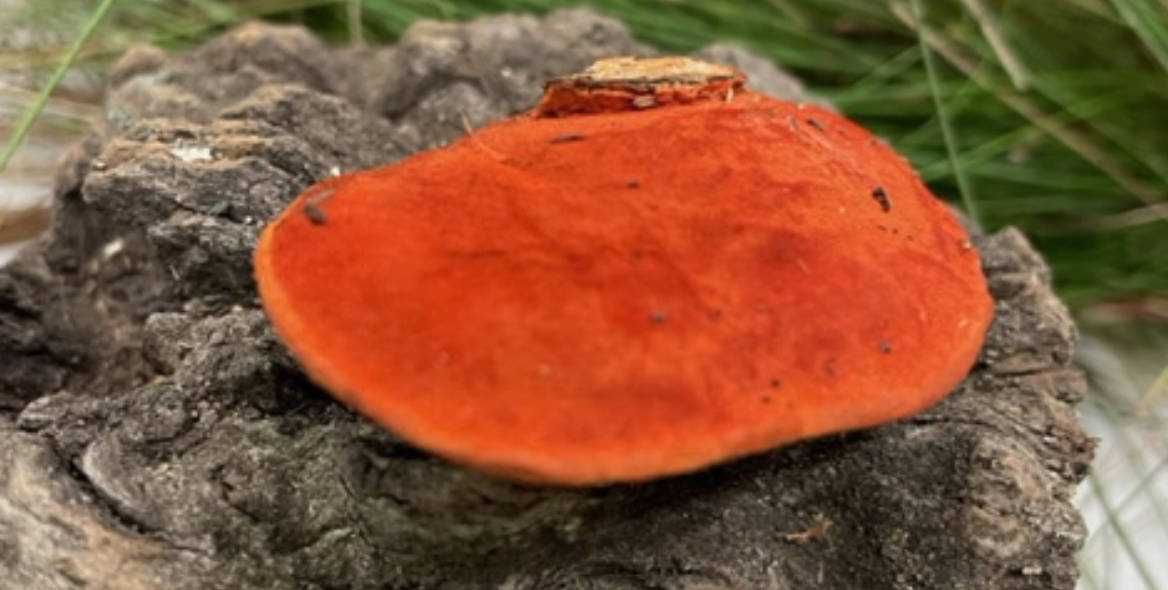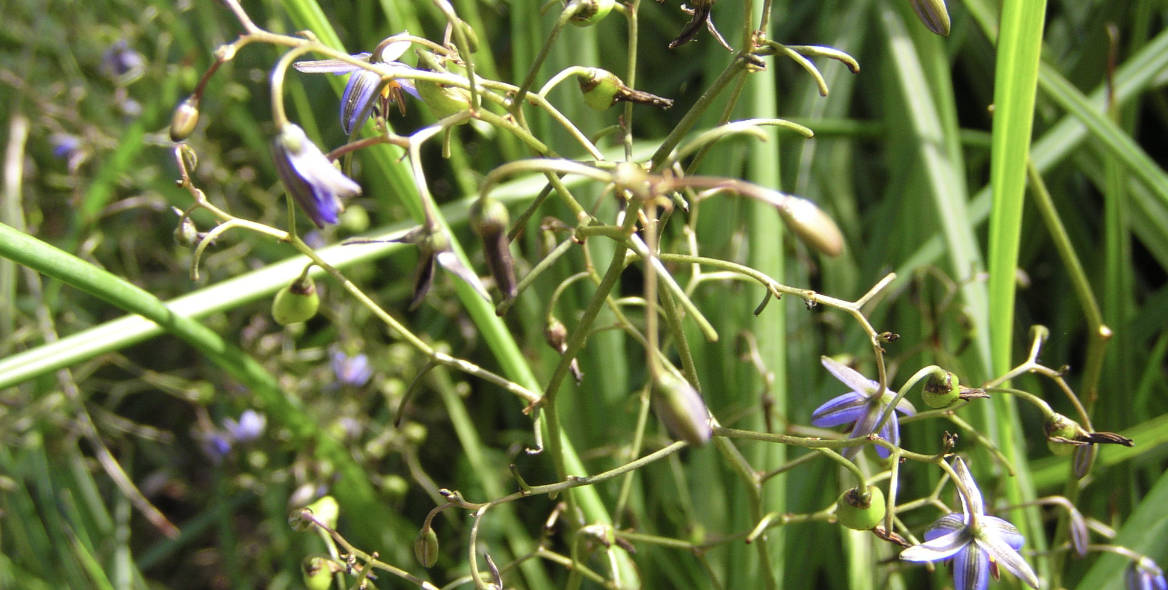


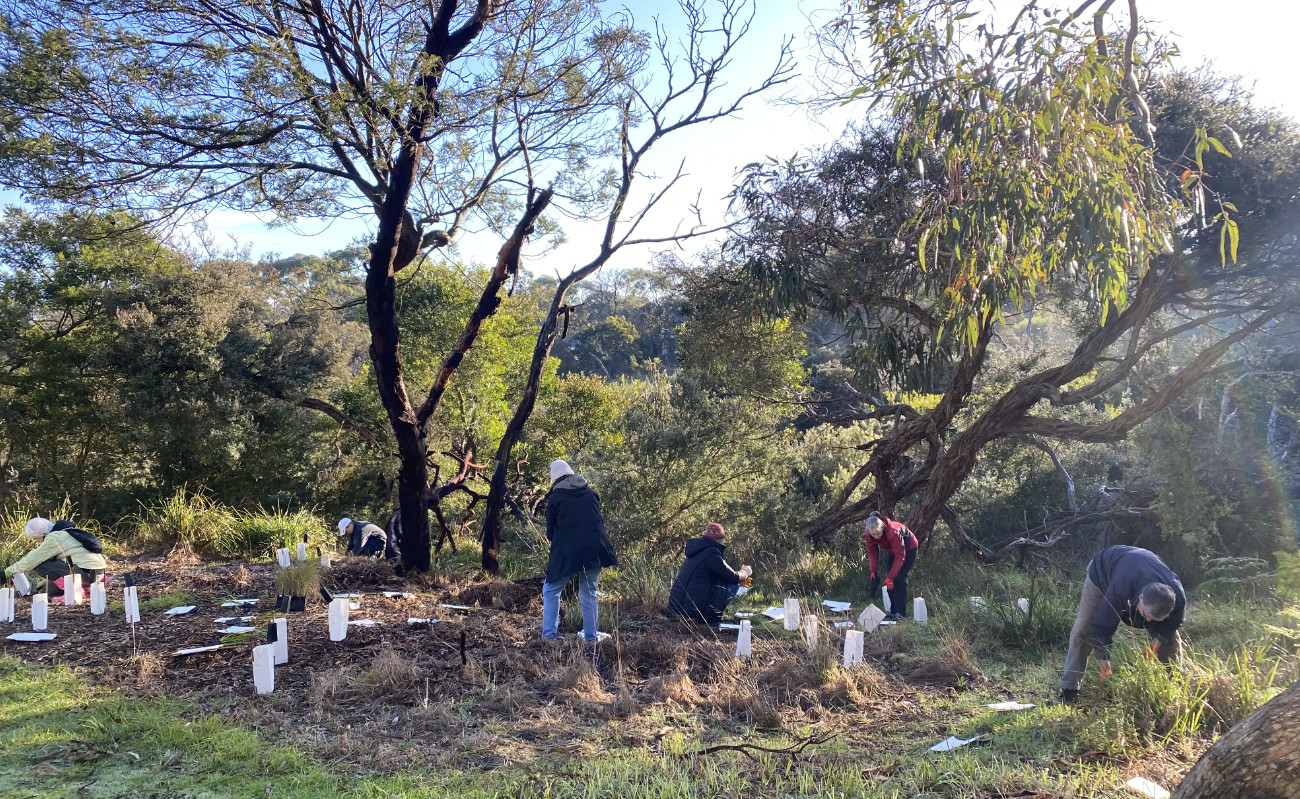
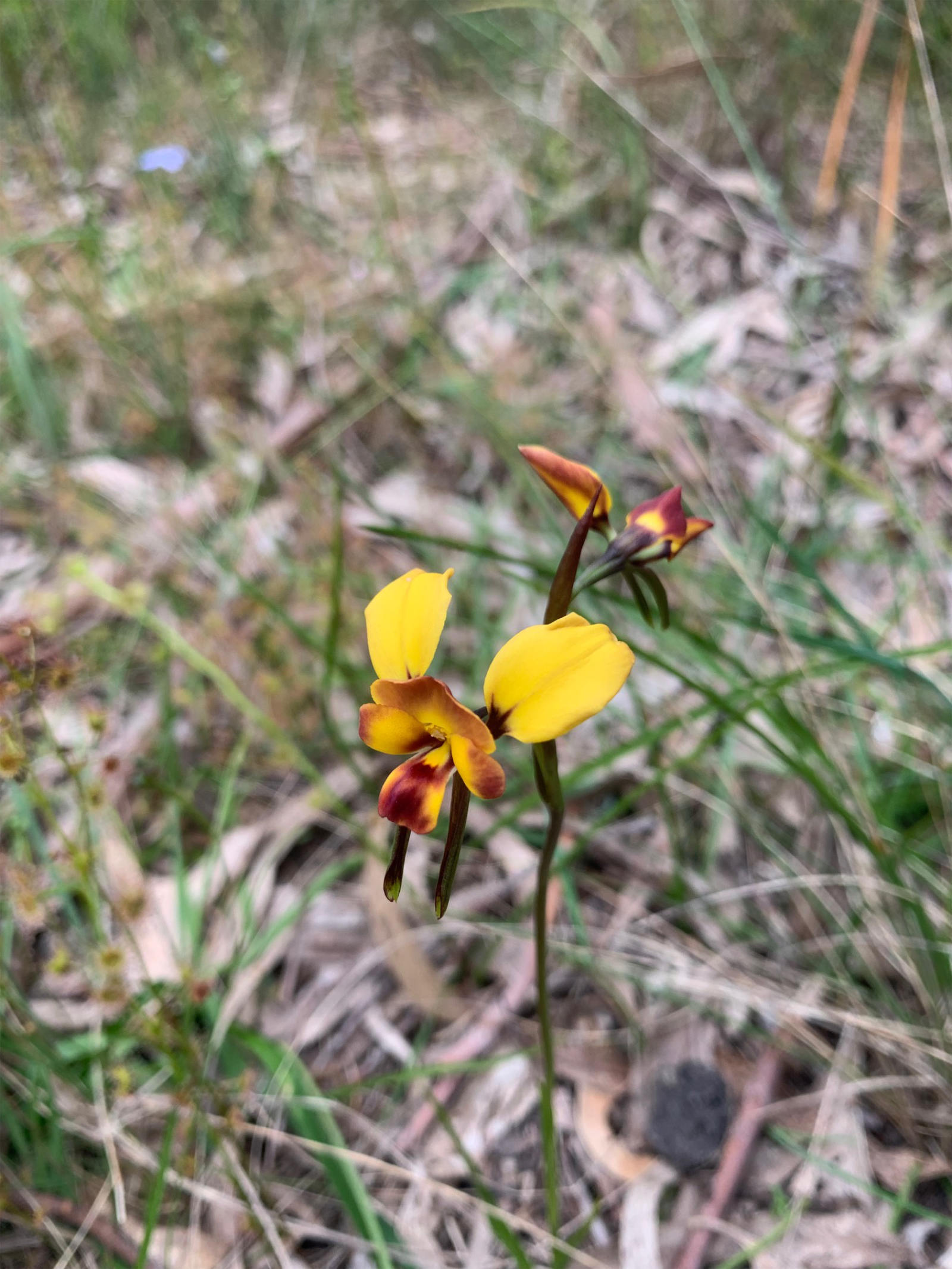
Acacia suaveolens, Sweet Scented Wattle  - Photography by: Gill Gordon Revegetated site - Photography by: Lee Theofanis Koala - Photography by: Lee Theofanis

Sunshine Bushland Reserve is a linear remnant stream bushland Reserve on the northern slopes of Mount Martha. It is managed by Mornington Peninsula Shire, through the Natural Systems Department.


THE LOCATION OF SUNSHINE RESERVE

Click to view larger size map The Sunshine Reserve is located in an area running south-east from the Esplanade, Mount Martha for circa 1.7km, as shown on Melway Map 150 H4. The geomorphology, geology, soils and climate of Sunshine Reserve below Panorama Drive, are outlined by Calder (1988) and Bailey et al. (1990).

The following paragraph is taken from Calder (1988):
“Sunshine Reserve straddles the boundary between two geological formations: (a) The Palaeozoic granodiorite massif of Mount Martha, and (b) a Quaternary siliceous sand sheet. The sand sheet extends from near Sunshine Creek to Balcombe Creek, and inland to Panorama Drive. The course of Sunshine Creek through Sunshine Reserve approximately follows the surface boundary between these two formations.”


Upstream of Panorama Drive, the Sunshine Reserve has similar geology and soils but the drainage lines become much less incised, ultimately becoming broad drainage swales. The soils and geology are similar to that described by Calder (1988).

Nearby Fairbairn Park, of gently, uniformly sloping western aspect, has slight evidence of drainage features there being one small drainage line. Its soils are gritty clay loams derived from the underlying Palaeozoic Mount Martha granodiorite massif, probably with a veneer of siliceous sand derived from Quaternary sediments (see Calder 1988).

Sunshine Creek discharges into Port Phillip Bay. The Reserve is now a haven in Mount Martha for endangered wildlife.

Some flora and fauna species numbers were down to single figures, which are slowly returning. In a study undertaken in 2007 by Malcolm Legg, he identified Sugar Gliders, and Dusky Agile Antechinus as being resident and also under threat.

The group aims to get this reserve back to a condition where the balance is tipped back in favour of the indigenous flora and fauna. And which will be an example of local indigenous vegetation for future generations.

PAST HISTORY

According to local historian Malcolm Gordon in his book Victoria’s Mornington Peninsula, the Boonerwrung People had Family groups known as Ngaruk willam (willam meaning family). About 10 families made up the band. Numerous middens along the coast are evidence of Boonerwrung occupation and settlement.

They had a campsite at Ballerm Ballerm, (identified on Smythe’s original map of the area) which is translated as place where two creeks meet now known as Sunshine Creek, This is located at the bottom of Hearn Road and was a summer coastal camping spot, their permanent village being near The Briars Homestead.

The Boonerwrung people used this land as a “natural supermarket” and practiced what we today call sustainable farming or permaculture.

AFTER WHITE SETTLEMENT, NON-INDIGENOUS CULTURE:

These lands were owned by the Crown and leased to the pastoralists. The area around Sunshine Creek formed part of the original Briars Pastoral run established in 1840. It then became part of the Hearn Sheep Station in the 1850’s and the land was used specifically for cattle and sheep grazing.

THE GOLD RUSH PERIOD TO FEDERATION:

After the end of the gold rush period (approx late 1850s), the government suspended pastoral leases in an attempt to find land for ex-gold rush miners and their families. The land around Sunshine Creek remained a grazing property.

In the 1880s, the area of Sunshine Creek became part of the Mount Martha Company land development for exclusive residential development. This is when the nearby quarry on Panorama Drive corner with Alexandrina Rd was developed. Local stone or granite was used in several local residences, as well as road curbing and construction of some Melbourne buildings.

Sunshine Creek was at this stage known as Granite Gully.

IN THE TWENTIETH CENTURY

Massive amounts of mature vegetation was removed, mainly She-oakes and Eucalypts, for the cement work kilns at Fossil Beach or shipped to Melbourne for firewood. Pastoralists burners grazed sheep and cattle which compacted the soil.

During World War II the area was used for army purposes, and the “Blamey Line” a series of trenches was constructed for military training purposes. These are still evident today.

During the 1920s, holiday homes began to be constructed in areas of Mount Martha for the exclusive use of wealthy Melbournians. The area around Sunshine Creek began to be developed during the 1940s and 1950s. It was cheaper land being further away from the beach & Mount Martha village and smaller allotments.

Currently most of the land around Sunshine Creek in 2008 is mainly permanent residents, with a few remaining holiday houses.

STORM WATER

Sunshine Reserve was established in the 1980’s as a drainage reserve associated with the residential development adjoining the creek or in this vicinity. The original headwaters were on the today Mount Martha Golf Club, so it is now an ephemerlal creek.

Sewerage in this area moved from septic tanks to sewerage pipage in the late 1980s. Prior to this, most septic and storm water run-off was directed into the creek. Several wetlands were constructed at this time along the course of the creek, to slow down the discharge water.

It is the storm water catchment from the surrounding area and its ongoing protection and preservation is of great importance. Areas of the coastal complex have been subject to bank slumping, which has been noticeably improved from six years of creek planting, through the help of CoastAction/Coastcare grants, two Federal Envirofund Grants and three Melbourne Water grants.

The water being discharged into Port Philip Bay has been noticeably free from silt and rubbish. This proves that the work carried out to date has been highly successful. Sunshine Reserve were nominated in the environmental awards with local resident Gill Gordon winning the Dame Phyllis Frost award.

FLORA

Sunshine Creek is home to several species of fish, and the surrounding bush much remnant flora. According to a report carried out by Ecology Australia in 2000; The remnant indigenous vegetation of Sunshine Reserve and Fairbairn Park, Mount Martha, Victoria was assessed to:

  • describe the vegetation
  • determine conservation significance
  • assess vegetation quality
  • provide management recommendations.

Three regionally significant vegetation are present on the site. These are:

  • Woodland Complex
  • Swamp Paperbark Scrub
  • Coastal Complex.

These categories have been redefined under the EVC as Gully Woodland. One plant species of State significance was recorded: Slender Sword-sedge (Lepidosperma gunnii). Twenty-three species of Regional Significance were recorded and all other remaining indigenous species are locally significant.

See our AUG NEWSLETTER for photos & feedback from Planet Ark Day at Sunshine Reserve.

Next working bee: Sun 1st July 2012
9.30am - 12.30pm
Waterview Rise (off Summerset)

Next Committee Meeting:
Monday 16th July 2012. 7.30 - 9.30pm.
9 McLeod Rd. All welcome.


AGM REMINDER


The Annual General Meeting will be held on Saturday 8th September 2012 at 9.30am
The Eco House, The Briars, Mt Martha

Guest Speaker: Malcolm Legg

ALL WELCOME!